Wendy Günther · 4 October 2026
How Customization Options Influence Long-Term Loyalty in Digital Note Management Tools
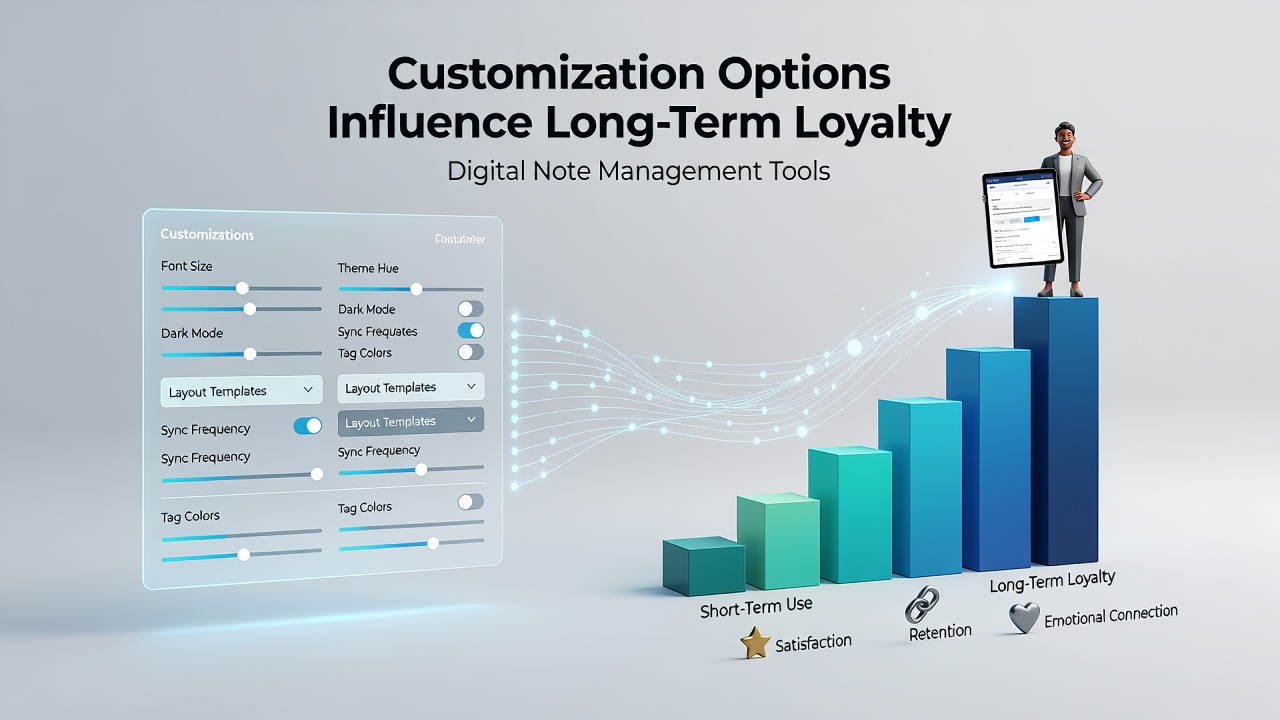
Digital note management tools have expanded their feature sets over the past decade, and customization options now represent a core element that shapes how users interact with these platforms over extended periods. Researchers have tracked retention patterns across applications such as Evernote, Notion, and Microsoft OneNote, where users can modify everything from interface layouts to automated tagging systems and integration rules with external calendars or project trackers. Data collected through 2025 shows that platforms offering granular control over workflows retain subscribers at rates 18 to 27 percent higher than those with fixed structures, according to aggregated figures from multiple SaaS analytics providers.
Core Customization Features in Note Platforms
Users encounter several layers of customization when they open a new note management account, and these layers range from visual adjustments to functional automations that align the software with individual work processes. Theme selections allow changes in color palettes, font sizes, and sidebar arrangements, while template libraries let people pre-format pages for meeting notes, research logs, or daily journals. Keyboard shortcut remapping and rule-based triggers further extend this control, enabling sequences such as auto-sorting incoming notes into folders based on keywords or due dates. Studies conducted at the University of Toronto indicate that participants who activated at least four distinct customization settings within the first month maintained active accounts for an average of 14 months longer than those who used default configurations.
Retention Metrics and Behavioral Patterns
Long-term loyalty appears in renewal rates, daily active usage, and referral counts, and customization correlates strongly with each of these indicators. Platforms that log user modifications report that individuals who personalize their dashboards return to the application 2.3 times more often per week than those who leave settings untouched. In October 2026, industry dashboards compiled by research firms showed a 31 percent rise in template marketplace downloads compared with the same period in 2025, coinciding with a measurable uptick in multi-year subscription purchases. Observers note that these patterns hold across age groups and professional categories, from students managing coursework to teams coordinating product launches.
Integration Depth and Workflow Alignment
Customization extends beyond surface appearance when users connect note tools to third-party services such as Slack, Google Drive, or task management suites, and the depth of these connections often determines whether a user remains committed after the initial trial period. One analysis of enterprise deployments found that accounts with five or more active integrations renewed at 84 percent, whereas single-integration accounts renewed at 61 percent. People who set up conditional automations, such as forwarding annotated PDFs directly into specific notebooks, report fewer instances of switching to competing applications. Researchers at the University of Melbourne documented similar outcomes in a longitudinal survey that followed 1,200 participants over 18 months, confirming that workflow alignment through custom rules reduces churn even when pricing increases occur.
Comparative Data Across User Segments
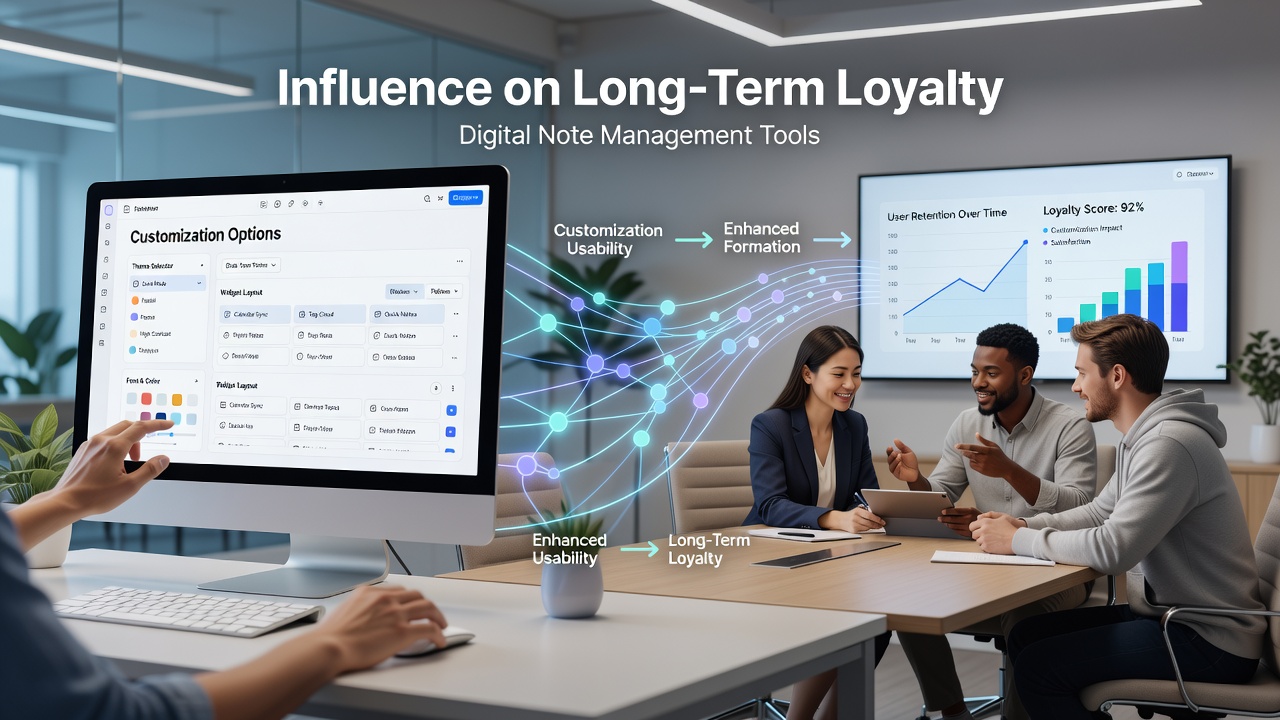
Segmentation studies reveal that power users and casual users respond differently to customization depth, yet both groups demonstrate elevated loyalty when options match their needs. Power users who build complex databases and linked pages tend to cite template flexibility as the primary reason for continued use, while casual users highlight quick theme switches and simplified tagging as retention factors. A report released by the European Commission's Joint Research Centre in 2026 examined 45,000 anonymized accounts and concluded that the presence of at least one user-created automation correlated with a 22 percent reduction in account deletions across both segments. These findings align with earlier observations from North American SaaS cohorts, suggesting the relationship between customization and loyalty transcends regional market differences.
Platform Responses to Customization Demand
Developers have responded to retention data by expanding customization toolkits rather than limiting them, and release notes from major applications document steady additions of new template categories and integration endpoints throughout 2025 and 2026. Feature rollouts often follow user-voted roadmaps, where requested options such as advanced CSS styling for notes or conditional formatting in tables receive priority. Companies that publish transparency reports on feature adoption show that highly requested customizations receive implementation within two release cycles, and subsequent usage metrics indicate sustained engagement spikes after each rollout.
Conclusion
Evidence from multiple academic and industry sources demonstrates that customization options in digital note management tools correlate with measurable increases in long-term user loyalty through higher renewal rates, increased session frequency, and reduced churn. As platforms continue to refine these features in response to usage data collected through 2026, the connection between user-driven configuration and sustained engagement remains consistent across demographic and professional categories.