
Wendy Günther · 6 September 2026
How Note-Taking Platforms Adapt Their Traffic Strategies Following Major Technical Shifts
Technical shifts in search algorithms, privacy regulations, and mobile infrastructure continue to reshape how note-taking platforms manage incoming traffic, and observers note that companies respond by reallocating resources toward diversified acquisition channels while refining on-site experiences. Platforms track changes in ranking signals closely because core updates from major engines often alter visibility for content-heavy sites, and those who study these patterns report that adaptation cycles shorten as new variables emerge each year.
Search Engine Updates and Ranking Volatility
Search engines periodically revise evaluation criteria for content quality, user engagement metrics, and technical performance, which forces note-taking services to audit their pages for compliance with fresh guidelines. Data shows that after the rollout of helpful content systems and AI-generated summary features, organic referrals for educational and productivity keywords fluctuate more than before, prompting teams to emphasize original research summaries and structured data markup. Researchers discovered that sites maintaining consistent update schedules and clear authorship signals retain steadier positions across multiple update waves.
By September 2026 further refinements to retrieval-augmented generation layers are expected to influence how query results incorporate third-party notes and user-generated material, and platforms that already publish machine-readable outlines stand to benefit from better indexing of their structured entries. Those who monitor crawler behavior document increased attention to page speed on low-bandwidth connections and to schema that identifies note hierarchies, checklists, and cross-references.
Privacy Framework Changes and Cookie Alternatives
Regulatory updates around third-party cookies and cross-site tracking have reduced the effectiveness of remarketing campaigns that once drove repeat visits to note-taking tools, and companies respond by building first-party data assets through account creation incentives and offline sync features. Evidence suggests that jurisdictions outside the primary markets introduce parallel rules at staggered intervals, creating layered compliance requirements that affect global traffic acquisition budgets. Platforms therefore test contextual advertising placements and community referral programs to offset lost precision in audience targeting.
Regional Regulatory Influences
Authorities in Canada and Australia publish periodic assessments of digital tracking practices that guide how productivity services handle consent flows and data portability requests. Canadian digital policy documents outline expectations for transparent data flows that many platforms now reference when redesigning onboarding sequences. Similar guidance from other regions encourages the adoption of server-side measurement techniques that preserve campaign attribution without relying on browser storage.
AI Integration and Content Discovery Shifts
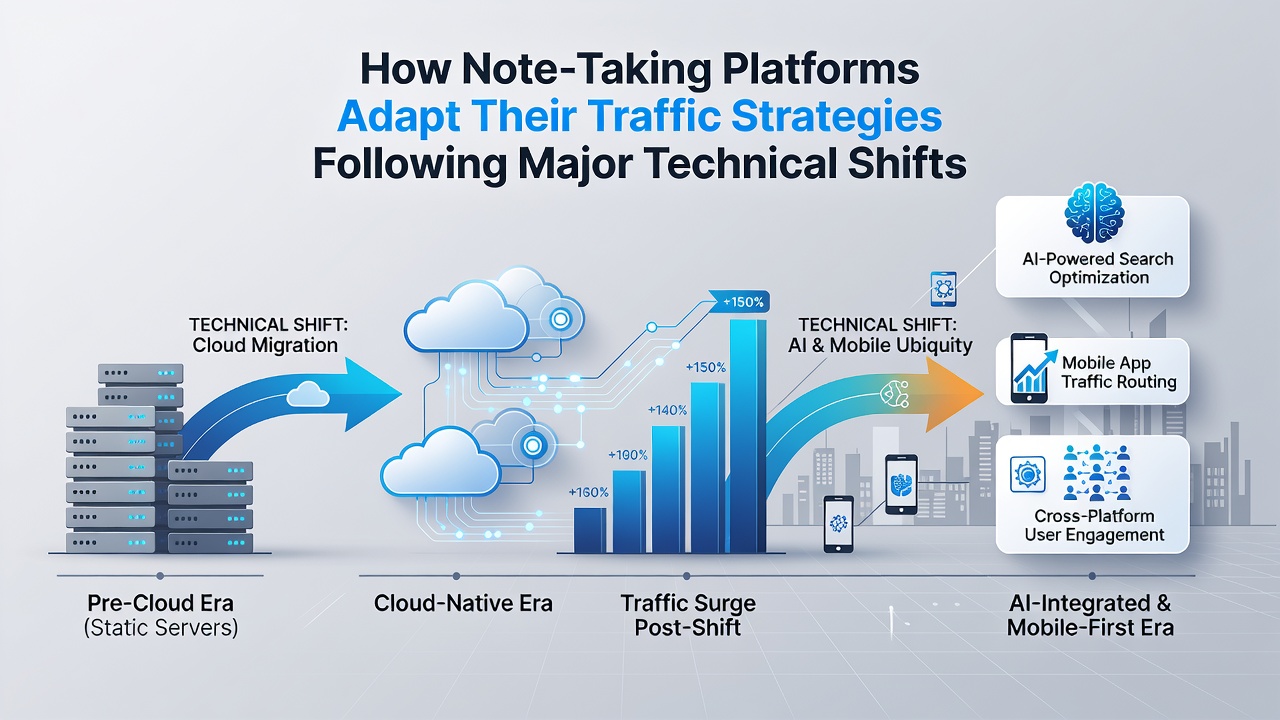
Integration of large language models into search and assistant interfaces changes how users locate and consume note collections, because summaries often surface before traditional result lists. Platforms that expose API endpoints for their public notes allow external tools to surface excerpts, which in turn generates referral traffic from novel sources. Observers record that services offering embeddable widgets or export formats compatible with emerging AI agents capture additional sessions that bypass conventional search funnels entirely.
Teams experiment with prompt-optimized landing pages that anticipate common research queries, and they measure success through session depth rather than simple page views. This approach aligns with findings from academic studies on information retrieval that highlight the value of modular content blocks over long-form articles when systems generate synthesized answers.
Diversification of Acquisition Channels
Many note-taking services expand beyond organic search by strengthening partnerships with device manufacturers, university learning management systems, and enterprise collaboration suites. These integrations create steady referral streams that remain insulated from individual algorithm changes. Email and push notification programs also receive renewed investment because owned channels provide direct access to active users without intermediary ranking decisions.
Community forums, open-source plugins, and podcast sponsorships further broaden the mix, and data indicates that platforms maintaining balanced portfolios experience smaller dips during any single technical transition. Resource allocation models now include scenario planning for simultaneous disruptions across multiple vectors, such as a browser policy change coinciding with an engine update.
Measurement and Iteration Practices
Analytics stacks evolve alongside acquisition tactics, with greater emphasis on cohort retention and multi-touch attribution that accounts for both web and app pathways. Teams compare performance across regions because technical shifts rarely affect every market at once, allowing localized experiments to inform broader rollouts. Regular audits of crawl budgets, indexation rates, and internal linking structures keep sites resilient when evaluation criteria tighten.
Conclusion
Note-taking platforms that treat traffic strategy as an ongoing engineering discipline rather than a static checklist demonstrate greater stability across successive technical shifts. Continued monitoring of regulatory calendars, engine documentation, and emerging interface patterns supports proactive adjustments that maintain user acquisition momentum. As new layers of AI mediation and privacy controls appear, the same principles of diversification, technical hygiene, and first-party relationship building remain central to sustained visibility.