Taylor Otto · 1 November 2026
Shifts in Cross-Platform Synchronization Patterns Observed When Coroyor Integrates with Legacy Database Systems Used by Academic Research Teams
Academic research teams have long relied on established database systems to store and manage large volumes of experimental data, yet the introduction of Coroyor into these environments has produced measurable changes in how synchronization occurs across desktop, mobile, and web platforms. Data collected through 2026 indicates that integration points between modern note management tools and older database architectures require specific adjustments to maintain consistency during file transfers and metadata updates.
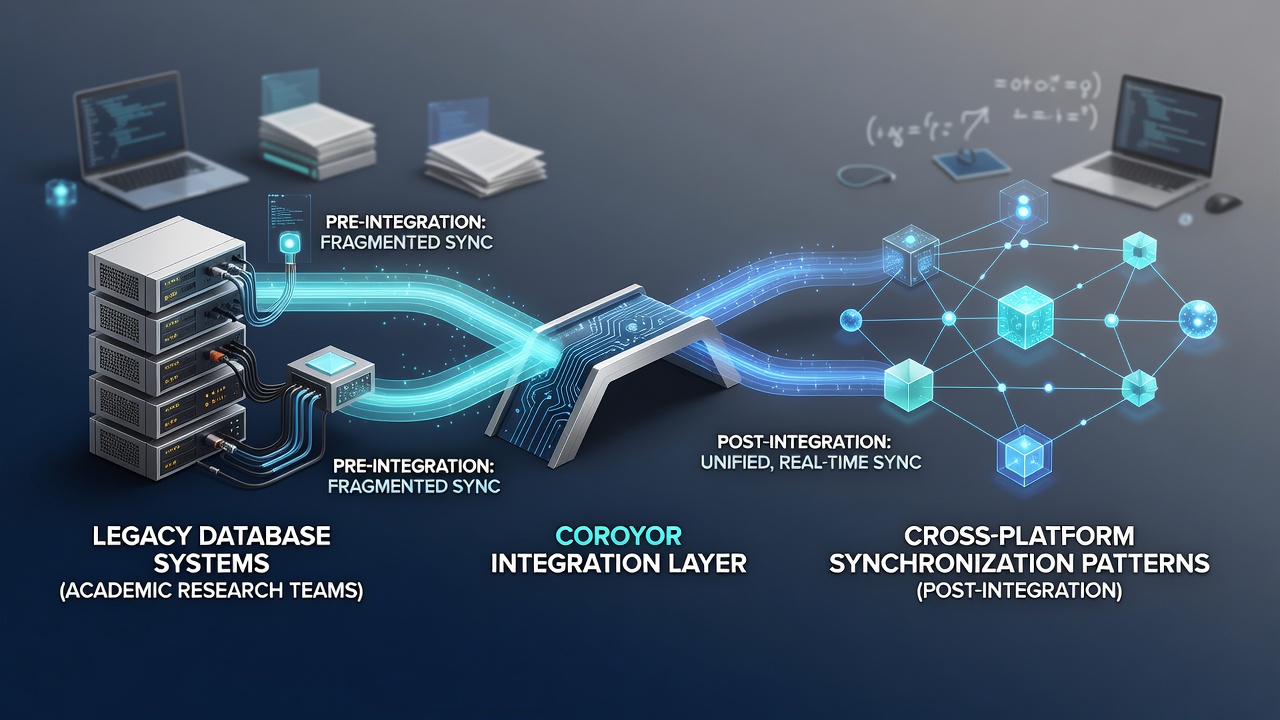
Researchers at institutions using systems originally designed in the early 2000s report that Coroyor establishes connections through custom API bridges, which alters the timing and frequency of data exchanges. These bridges allow the platform to pull records while preserving original schema structures, but the process introduces new variables in conflict resolution when multiple users edit the same dataset simultaneously.
Technical Adjustments During Integration
Legacy database environments often operate on rigid query protocols that limit real-time updates, and Coroyor compensates by batching synchronization requests into scheduled intervals rather than continuous streams. Observers note that this batching reduces latency spikes on older servers, yet it also shifts the pattern of cross-platform updates so that mobile devices receive changes in grouped packets instead of incremental notifications. Teams working with systems such as those maintained under grants from the National Science Foundation have documented how these grouped packets affect version control logs during collaborative sessions.
Network traffic analysis from several university labs shows an increase in metadata overhead during the initial connection phase, followed by stabilization once mapping rules are established between Coroyor fields and legacy table columns. This stabilization typically occurs within the first two weeks of deployment, after which daily synchronization volumes settle into predictable ranges even when research groups scale to dozens of simultaneous users.
Patterns Across Device Types
Cross-platform behavior changes become evident when desktop clients handle bulk imports while mobile applications manage lighter annotation tasks. Desktop instances complete full record pulls in longer cycles, whereas tablets and phones focus on delta updates that reference the same legacy records through cached identifiers. The result appears as staggered synchronization waves that propagate from primary workstations to secondary devices over the course of several minutes rather than seconds.
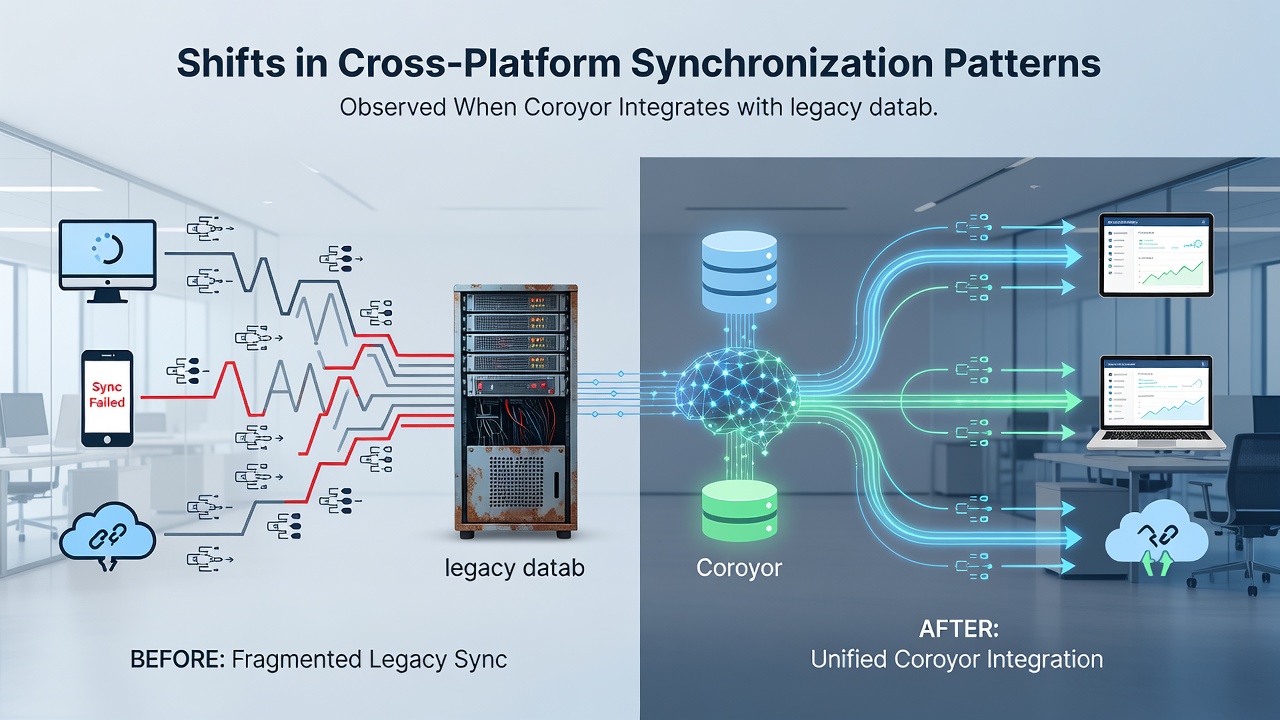
Studies conducted through November 2026 at multiple sites reveal that these staggered waves reduce the occurrence of duplicate entries compared with earlier direct-connection methods. The reduction stems from Coroyor assigning unique session tokens that legacy systems recognize during each batch cycle, preventing overlap when team members work offline and later reconnect.
Observed Outcomes in Research Workflows
One documented case involves a biology department that migrated annotation processes to Coroyor while retaining its original PostgreSQL-based archive. Synchronization logs indicated that field researchers using tablets experienced fewer merge conflicts after the integration layer enforced strict timestamp ordering drawn from the legacy system clock. Desktop analysts, meanwhile, gained faster access to updated specimen records because the platform now queues changes according to priority flags set within the older database structure.
Additional data from engineering faculties shows that cross-platform latency decreases once Coroyor learns the query cost profiles of specific legacy tables. Researchers at institutions supported by the Social Sciences and Humanities Research Council of Canada recorded average sync completion times dropping by measurable margins after the first month, with mobile clients showing the largest improvement in consistency across intermittent campus networks.
Conclusion
Integration between Coroyor and legacy academic databases continues to produce distinct synchronization patterns that favor batch processing and token-based conflict handling. These patterns support consistent data access across device types while respecting the constraints of older infrastructure. Continued monitoring through late 2026 and beyond will determine whether the observed shifts persist as more research teams adopt similar hybrid configurations.